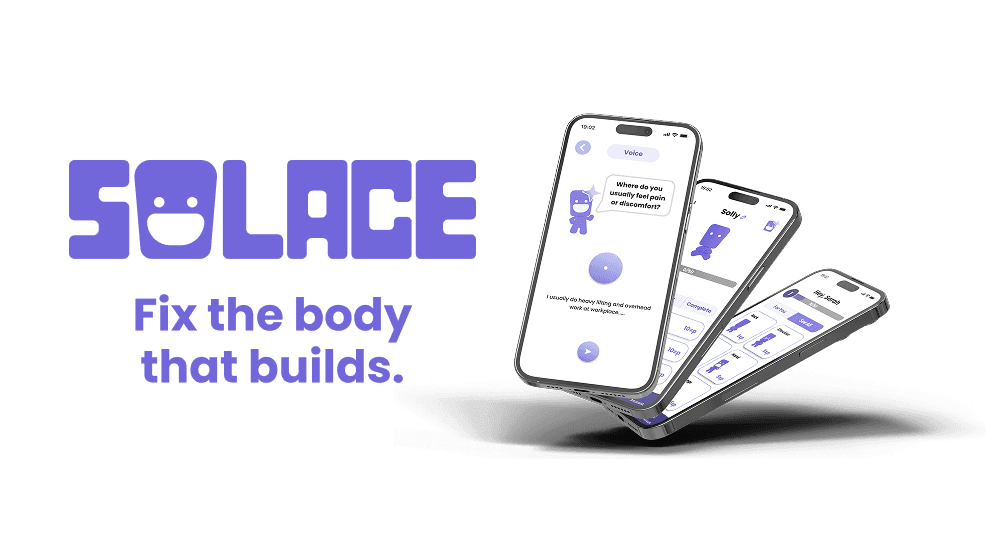
Led as Project Manager, UX Researcher, and Full-Stack Developer - 2nd Place at BCIT D3
Solace is the gamified wellness app I led end-to-end to help iron workers recover physically and mentally without adding to their already overwhelming schedules.
Chapter Rail
1/8
My Roles
Project Manager, UX Researcher, Full-Stack Developer
Team Size
7
Timeline
September 2025 - December 2025
At a Glance
I led a 7-person team to build Solace, a gamified recovery app for iron workers that combines UX research, AI-personalized routines, and emotional design to make wellness feel doable after physically demanding shifts.
Core Problem
Existing wellness apps do not fit the reality of trade workers.
Main Solution
AI routines + mascot feedback + streaks to reduce friction and increase consistency.
My Impact
Connected research, product direction, and development so the vision shipped intact.
Outcome
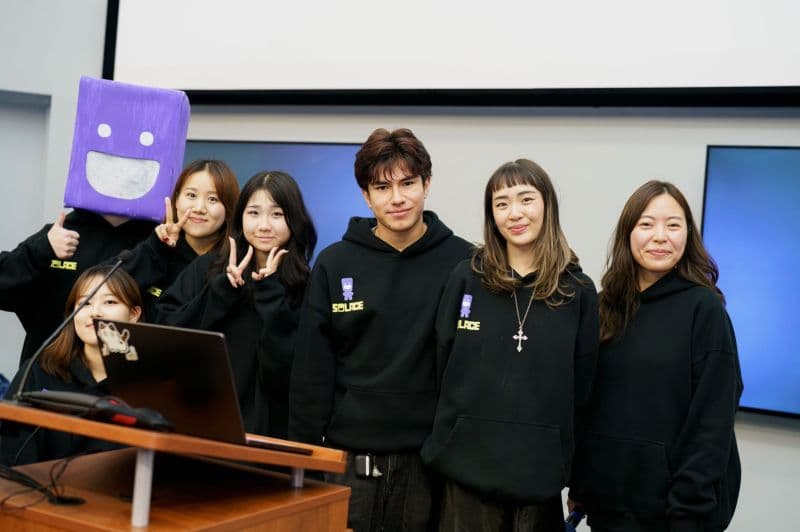
2nd place at BCIT D3 FSWD Annual Showcase.
01 Approach
How I Approached This
My Process: Research, Prioritize, Ship, Refine
My approach focused on keeping decisions grounded in user context while making sure the team could execute quickly and clearly:
- Start with user reality, not assumptions: I interviewed iron workers first, then mapped pain points and constraints before defining scope.
- Work in short decision loops: I ran weekly sprint checkpoints so we could validate quickly, catch risks early, and avoid drifting.
- Prioritize by impact and feasibility: I balanced user value with technical effort so the team stayed focused on what would actually ship.
- Document and align continuously: I kept decisions visible across design and dev so everyone moved in the same direction without rework.
02 Leadership
Wearing Three Hats Simultaneously
Project Manager
I ran weekly sprints, aligned priorities across seven teammates, and kept deliverables moving without losing momentum.
UX Researcher
I tested assumptions with users continuously and translated findings into concrete product decisions.
Full-Stack Developer
I implemented AI-personalized features with OpenAI and made sure ambitious ideas stayed technically feasible.
Research informed design, design informed engineering, and engineering fed real constraints back into product decisions.
03 Iteration
Learning Through Iteration
Early prototype: Generic exercise lists that looked like every other fitness app
User reaction: "This won't work for me"
What I changed: Added mascot visual feedback and work-specific customization
First flow: Users manually selected exercises
Usability insight: Overwhelming after exhausting shifts
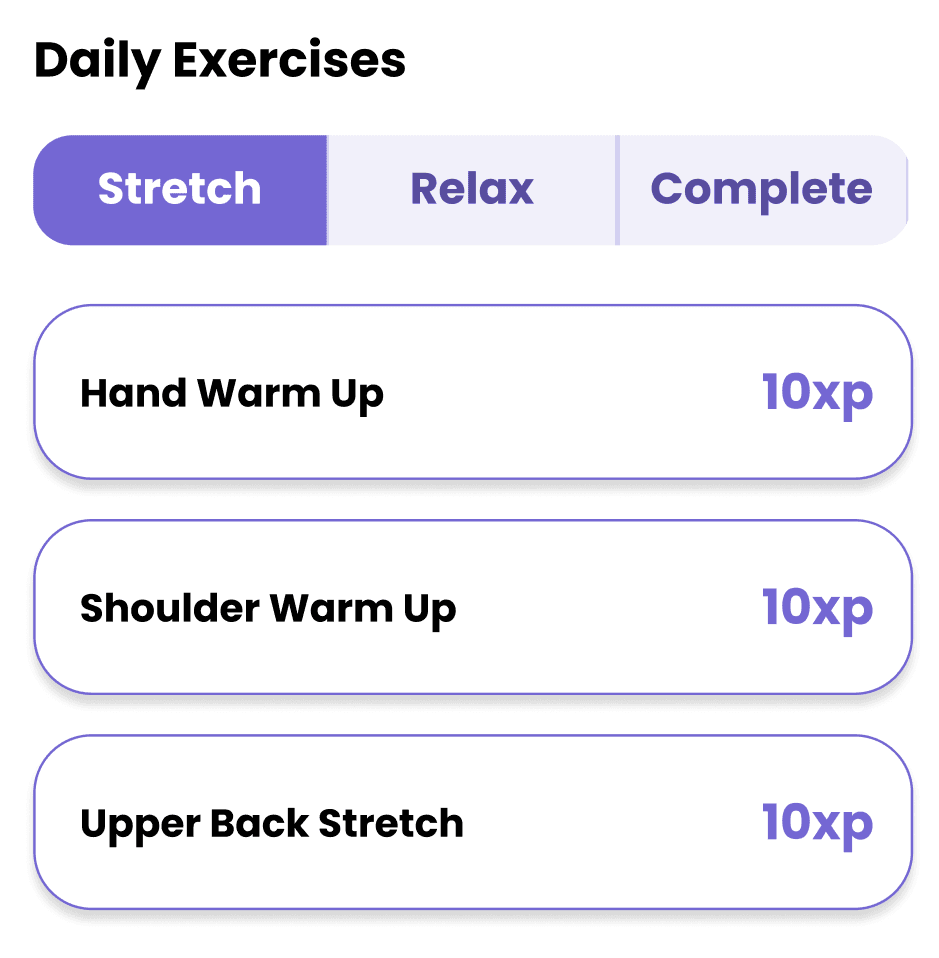
What I changed: AI generates daily checklists; catalogue becomes optional exploration
Sitemap
Open in new tab04 Challenge
The Core Challenge
Iron workers have no wellness tools built for their reality
Long, unpredictable hours. Chronic pain from physical labour. Cultural stigma around admitting you need help. The default coping mechanisms? Painkillers and alcohol.
Generic wellness apps assume 9-to-5 schedules and treat "self-care" like a hobby. For iron workers, these tools feel irrelevant at best, condescending at worst.
The question I kept asking: How do we make recovery feel achievable instead of like another thing they're failing at?
05 Research
What Research Revealed
Through interviews and empathy mapping with workers aged 20-40:
- Standard recovery advice doesn't translate to their chaotic schedules
- "Self-care" framed generically feels like extra work, not relief
- Visual progress and emotional stakes motivate more than data tracking
- They need tools that acknowledge both physical pain and mental exhaustion
06 Build
What I Built
Gamification and AI make recovery feel rewarding, not burdensome
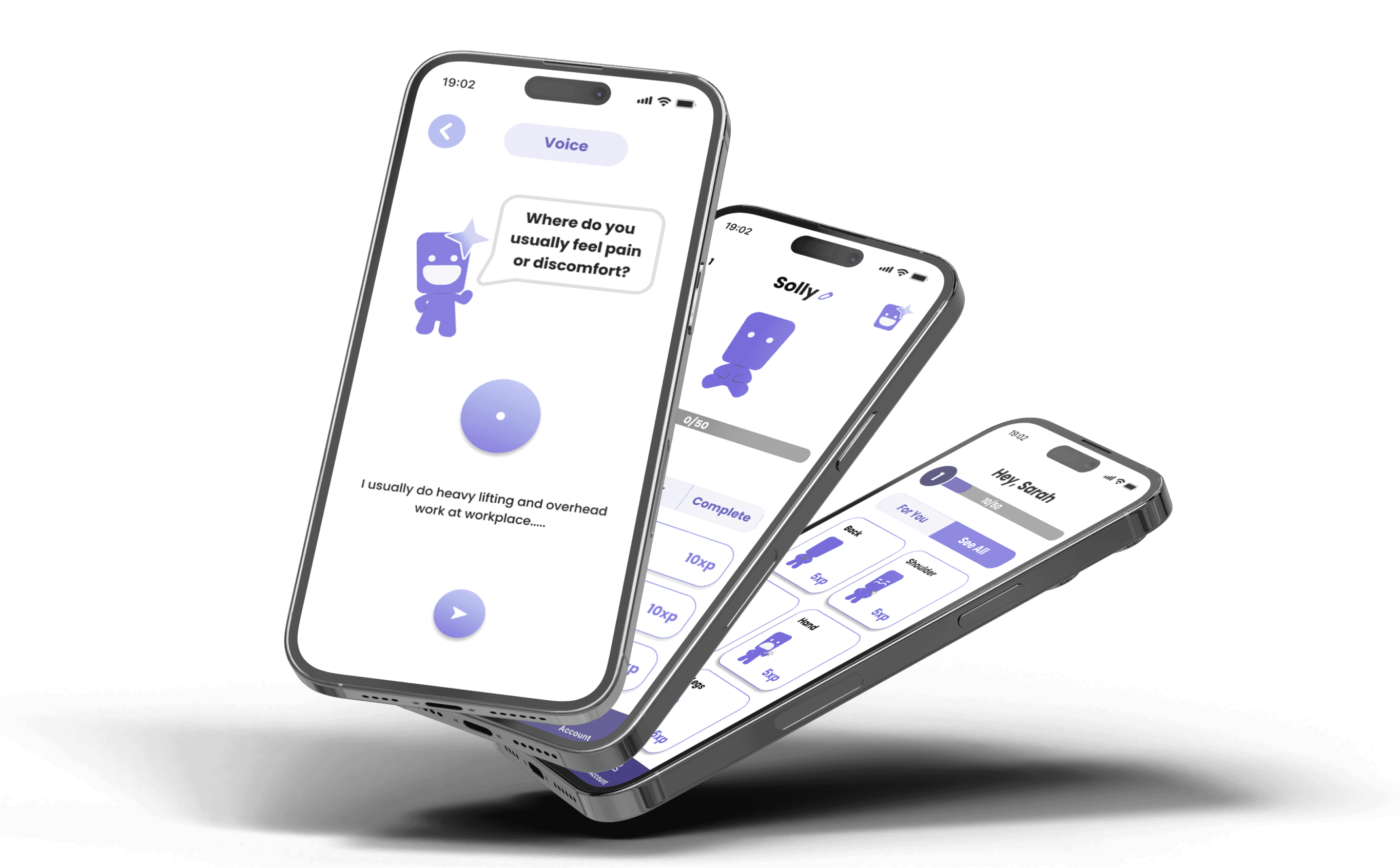
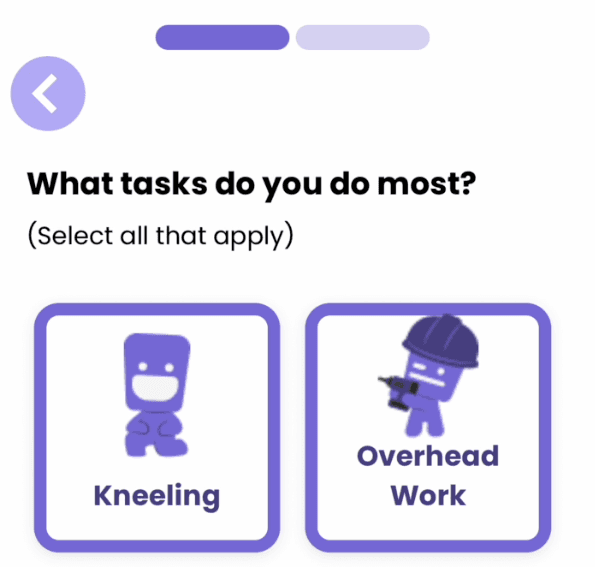
Solace turns wellness into something worth engaging with:
- Earn XP and streaks by completing daily exercises - physical and mental
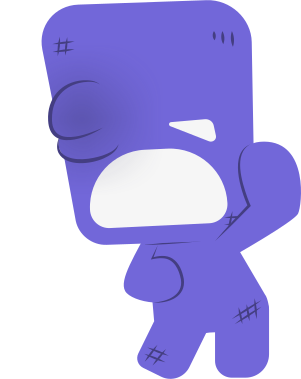
- Strengthen a mascot that visually mirrors your progress
- See consequences when you miss a day (injured mascot) - accountability without shame
- Get personalized routines adapted to your work type, pain areas, and energy levels
The design bets on emotional engagement. When recovery feels like progress in a game, sustainable habits become achievable.
Solace Demo Video
Open originalMascot States

Daily Checklist
Onboarding
07 Results
What Happened
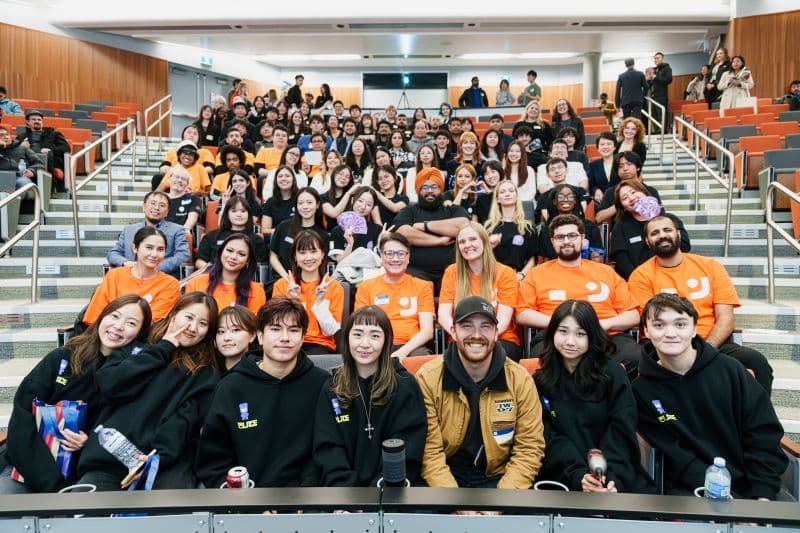
- 2nd place at BCIT D3 FSWD Annual Showcase
- Shipped a fully functional prototype proving trade-specific wellness tools can be both practical and engaging
- Validated through user testing: gamification reduced perceived effort while increasing consistency
- Demonstrated that bridging UX research and technical execution produces tighter, more impactful products
D3:ConnectHER Outcomes
08 Takeaways
What I Took Away
- Curiosity beats assumptions every time. Deep engagement with users' lived experiences shaped features aesthetic preferences never could.
- Wearing multiple hats created alignment. Managing the project, researching users, and building the product myself meant vision and execution stayed connected.
- Visual feedback > numbers. Mascot health and streaks motivated users far more than progress percentages.
- Structure enables creativity. Clear sprints and documentation let a seven-person team experiment without losing direction.